


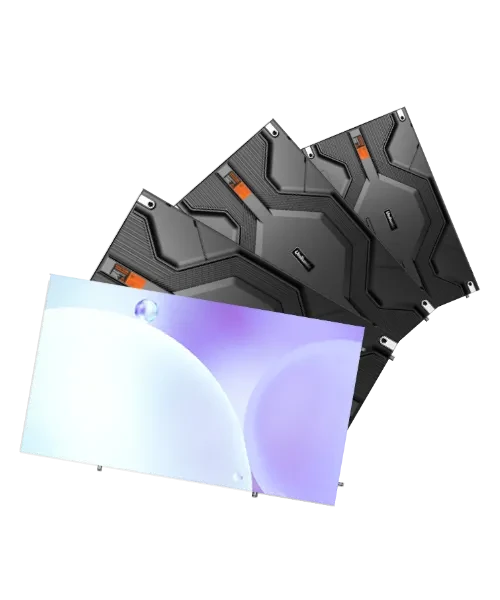



















LED video walls have become an increasingly common choice in broadcast studios and virtual production (VP) environments. This is driven by more convincing on-screen results, faster workflows, and the ability to give talent a real visual environment to react to. That said, not every LED display is fit for studio use. The technical requirements are specific, and a poor spec match can affect the quality of the footage.
What Makes an LED Video Wall Suitable for Broadcast and Virtual Production
Here are the core technical requirements for any broadcast-grade LED wall display worth recommending.
1. Fine Pixel Pitch
Coarser pitches can reveal a visible dot pattern that may require post-production cleanup. But a tighter pitch also puts a heavier load on the front-end servers and media servers, and that extra cost and complexity may not be worth it for the visual gain. One must weigh the gain against the added technical burden.
2. High Refresh Rate
Cameras set to fast shutter speeds or high frame rates pick up flicker from displays with low refresh rates. A higher refresh rate gives camera operators more freedom in their settings, and the difference shows up clearly in footage.
3. Deep Grayscale
Grayscale depth affects how smoothly a display renders gradients and shadow detail. Higher grayscale depth produces smoother tonal transitions that cameras can capture without banding, while lower grayscale depth can result in visible posterization.
4. Accurate Color Reproduction
Color accuracy is critical for virtual production in particular, where LED video walls serve as live backgrounds that must match the color science of the camera and the overall scene. Wide color gamut coverage keeps the image cohesive from every angle.
5. High Contrast Ratio
High contrast ratio allows the display to render both deep shadows and bright highlights within a single frame, which reduces the visible flatness that lower-contrast panels introduce in darker or dramatically lit scenes.
6. Seamless Panel Joints
Any visible gap or step between cabinet edges is a continuity problem that appears on camera. Structural precision in cabinet design and the quality of the splicing mechanism directly affect on-set usability.
7. Quiet Thermal Management
Fan noise is a real concern on live broadcast sets and film stages. Efficient heat dissipation at low acoustic output keeps the audio environment clean, which matters as much as the visual result.
Recommended Unilumin LED Video Walls for Broadcast Studios and Virtual Production
At Unilumin, we offer several LED wall display options well suited to broadcast and virtual production environments. The four below address different project scales and installation types.
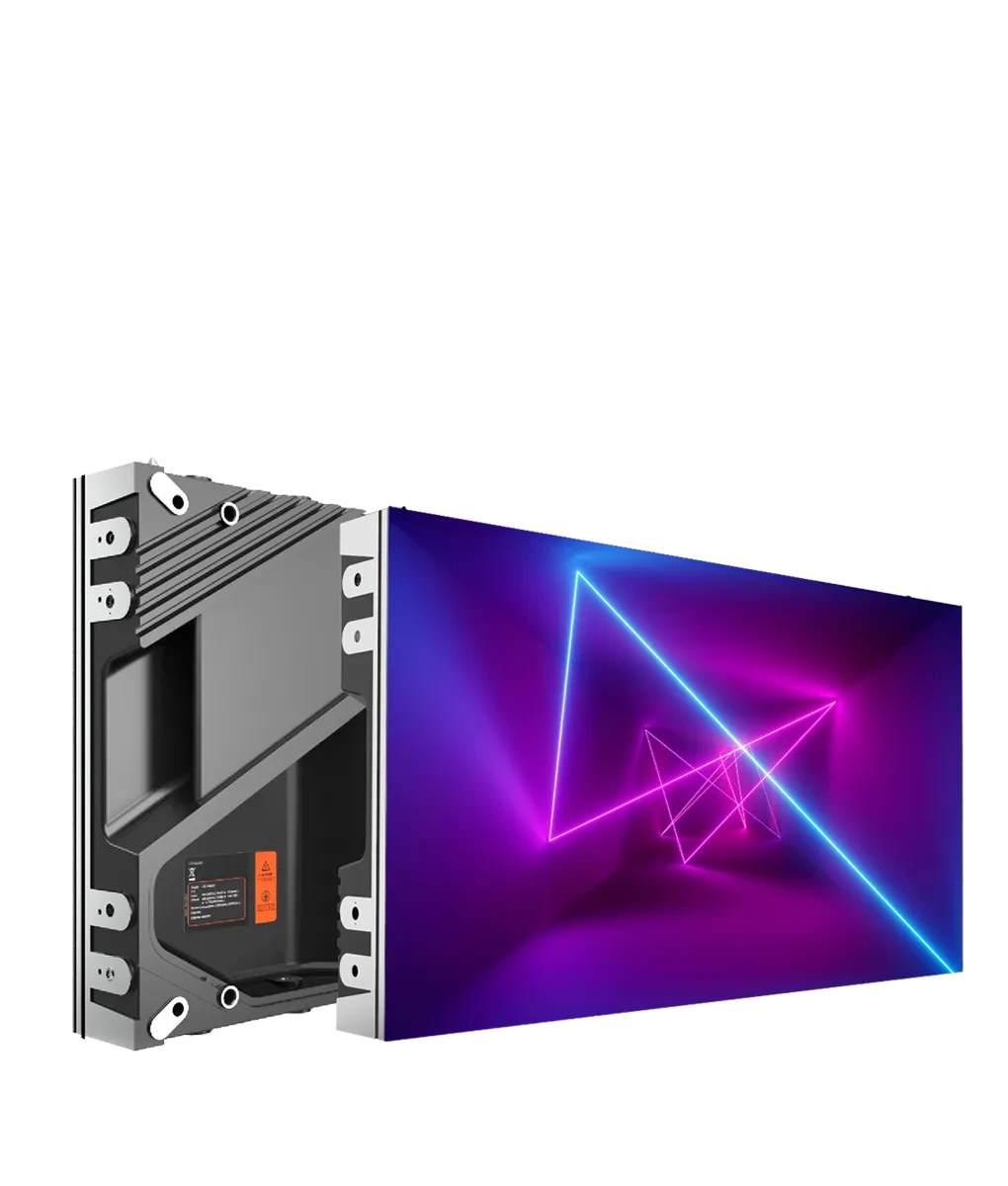
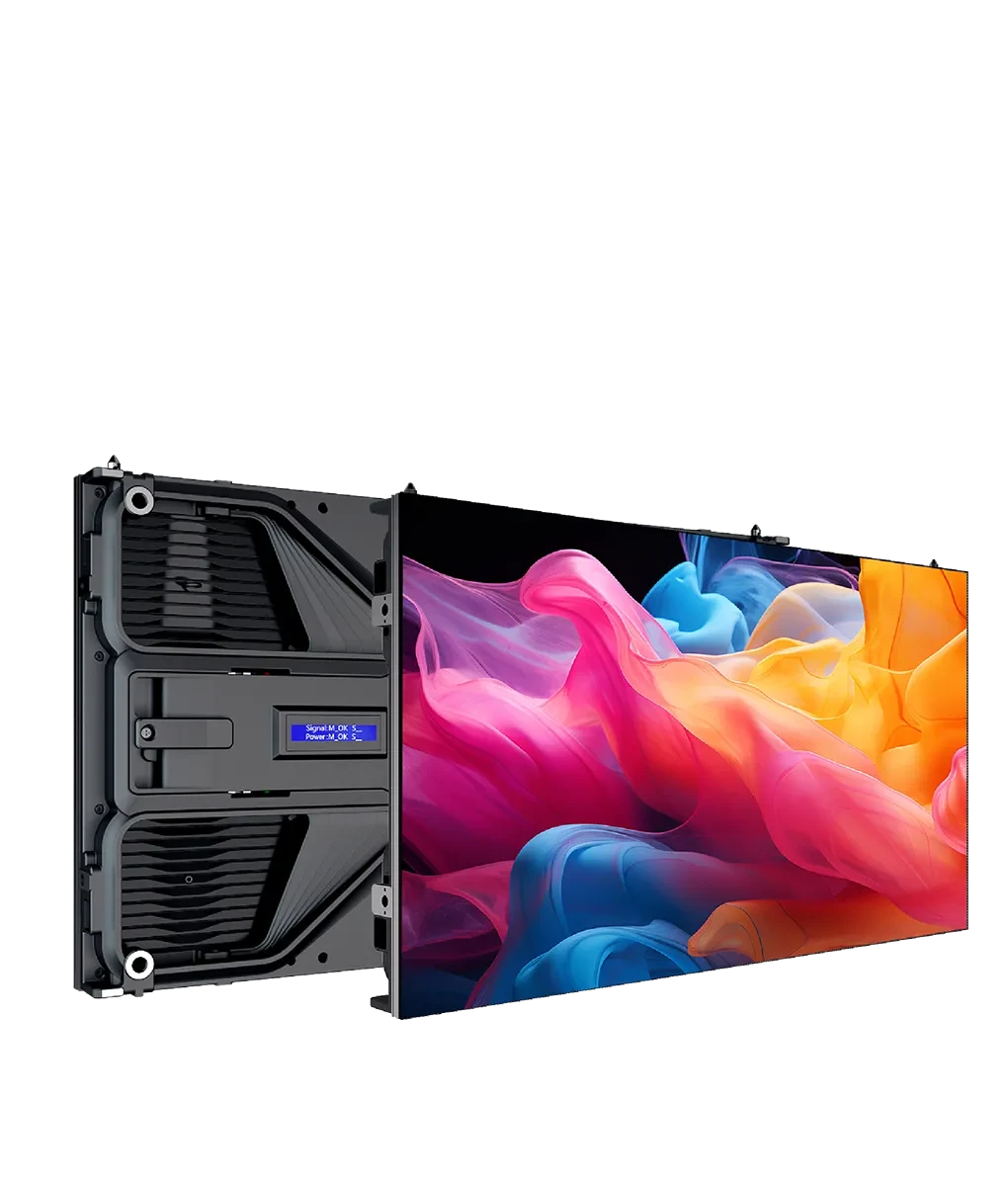
1. UpanelⅡ
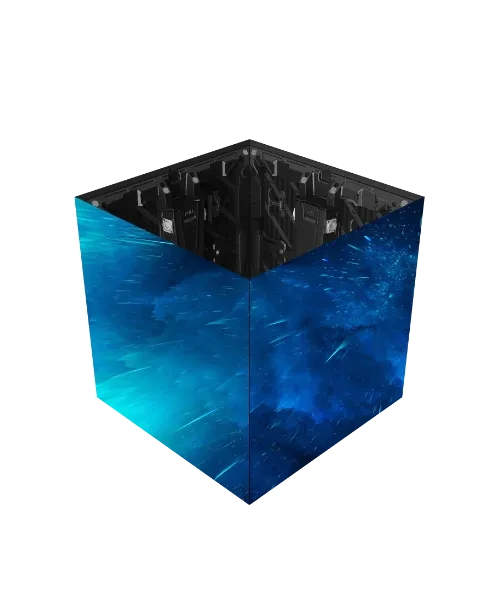
The UpanelⅡ is a professional display built on MIP (Micro In Package) technology, intended for broadcast control rooms, news sets, and studio backdrops where the screen stays in place and imaging consistency is the primary concern.
Key Specs:
- Pixel pitch: P0.9 / P1.2 / P1.5
- Refresh rate: 7,680Hz
- Grayscale: 21-bit
- Contrast ratio: 10,000:1
- Brightness: 600 / 1200 nits
- Cabinet size: 609.92mm × 343.08mm × 68mm
- Maintenance: Front
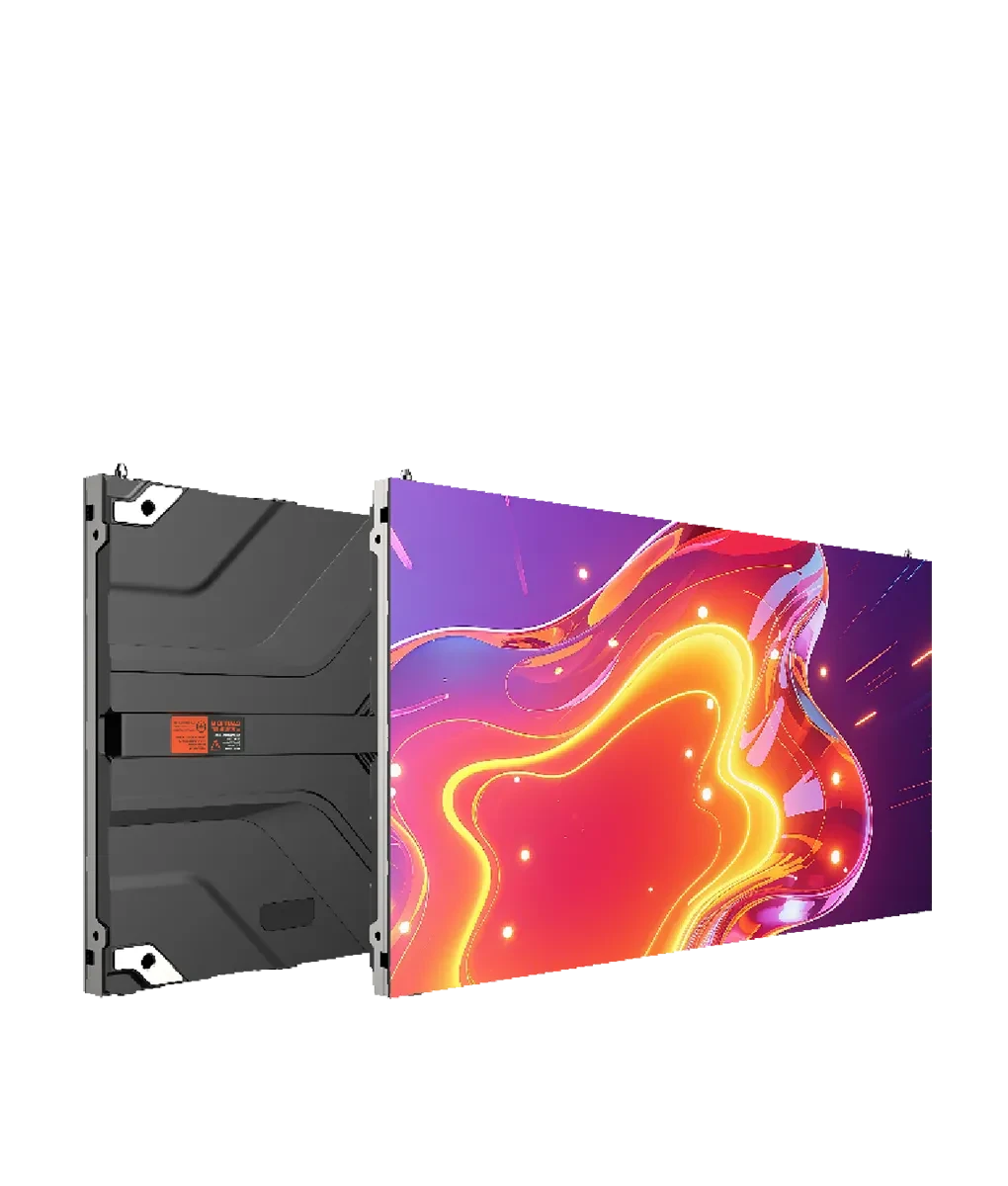
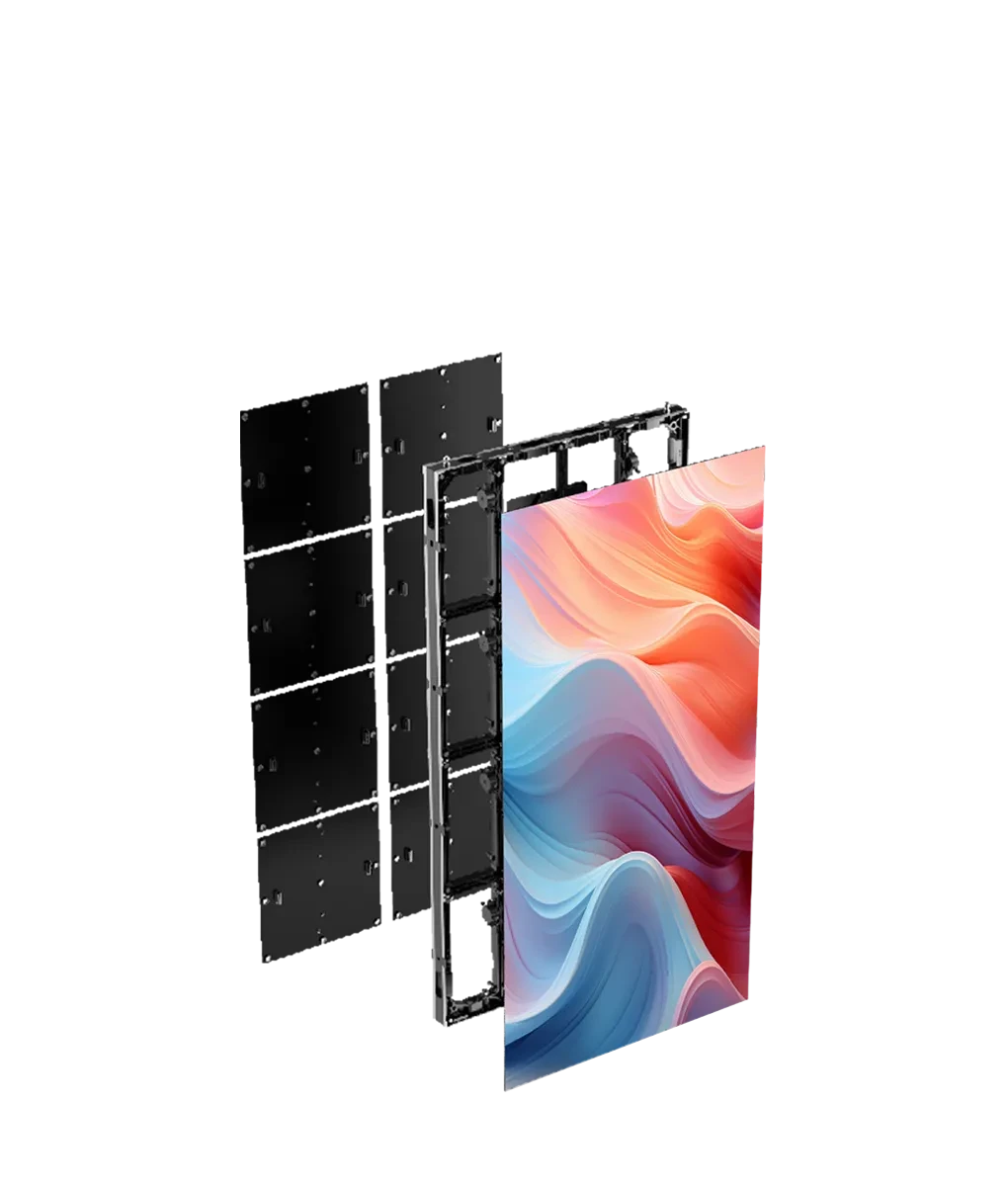
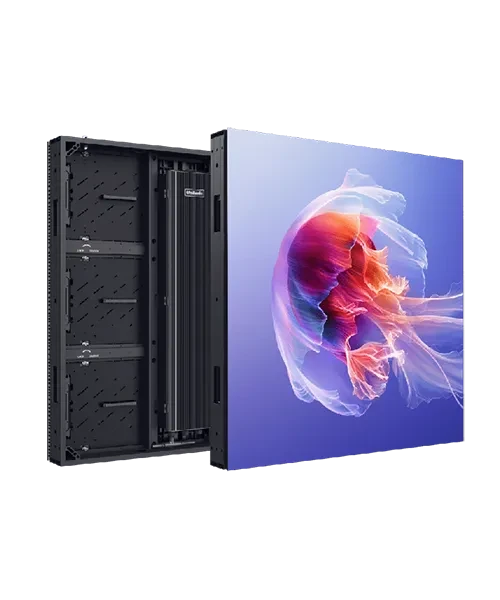
2. UpadⅣ
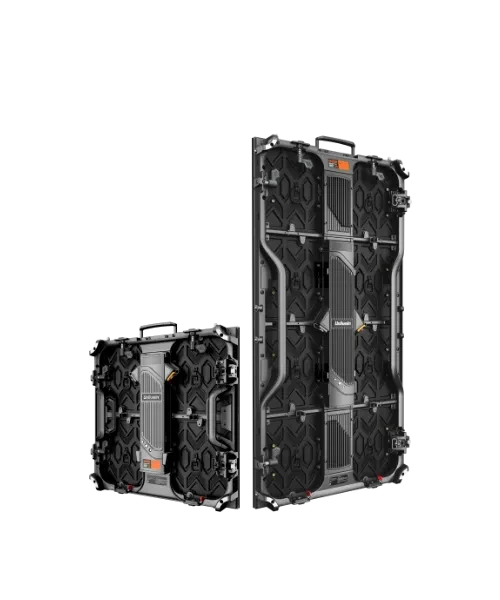
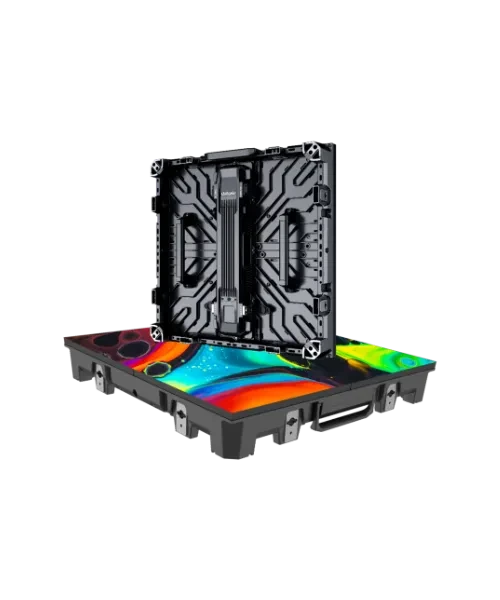
The UpadⅣ is our primary rental LED wall display for XR and virtual production applications. Its die-cast magnesium cabinet weighs just 6.3 kg per panel, roughly 30% lighter than comparable rental products, and the fast-lock mechanism allows a single engineer to handle assembly, which keeps crew requirements low during stage build days.
For virtual production specifically, the UpadⅣ F is a VP-optimized configuration of the UpadⅣ series. It is tuned with parameters, including enhanced color calibration and display settings matched to the requirements of real-time camera compositing.
Key Specs:
- Pixel pitch: P1.5 / P1.9 / P2.6
- Refresh rate: 7,680Hz
- Grayscale: 10-bit / 16-bit HDR
- Contrast ratio: up to 8,000:1
- Brightness: 800 cd/m² (P1.5, P1.9) / 1,200–1,500 cd/m² (P2.6)
- Cabinet size: 500mm × 500mm × 70.1mm
- Maintenance: Front and rear
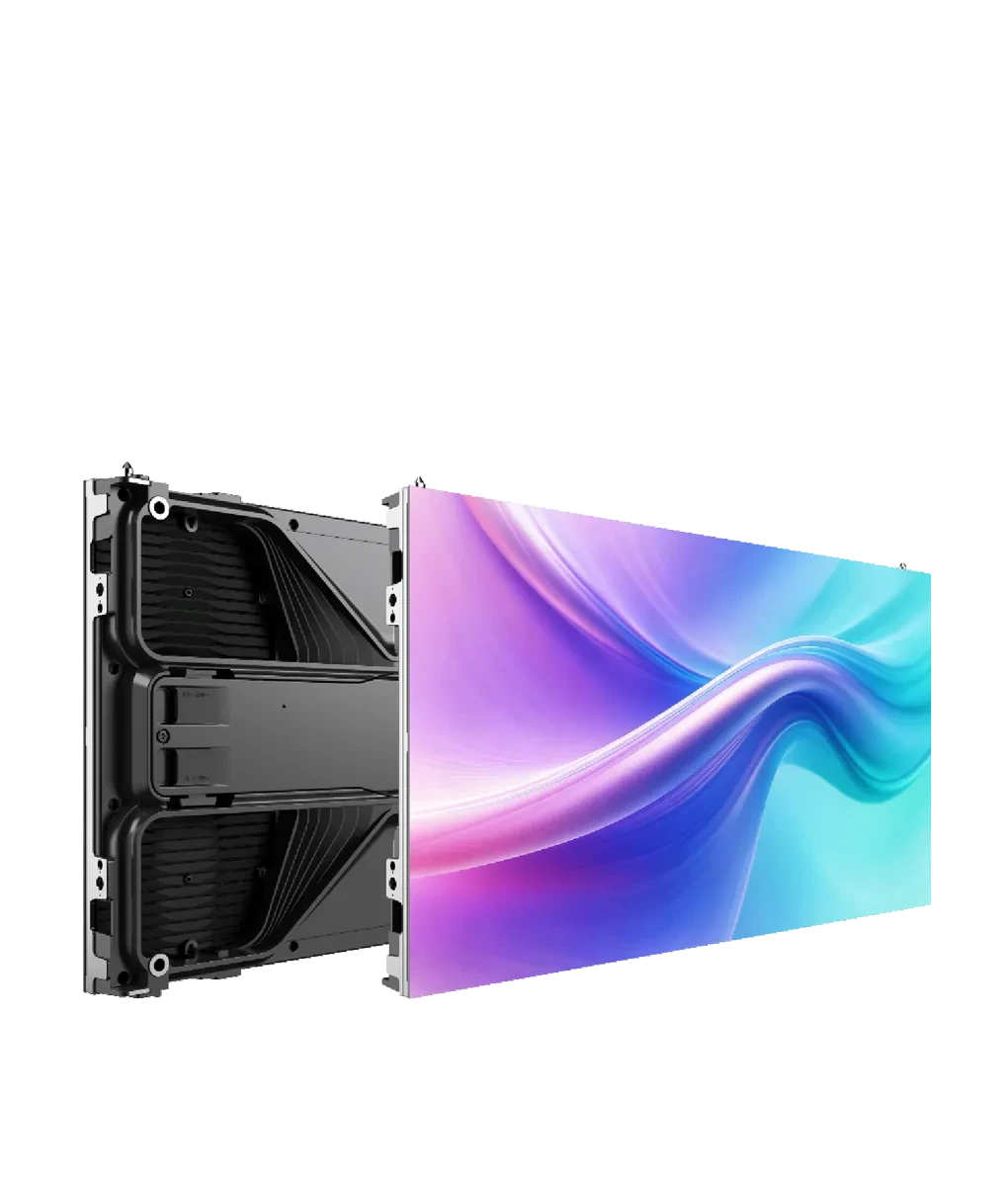
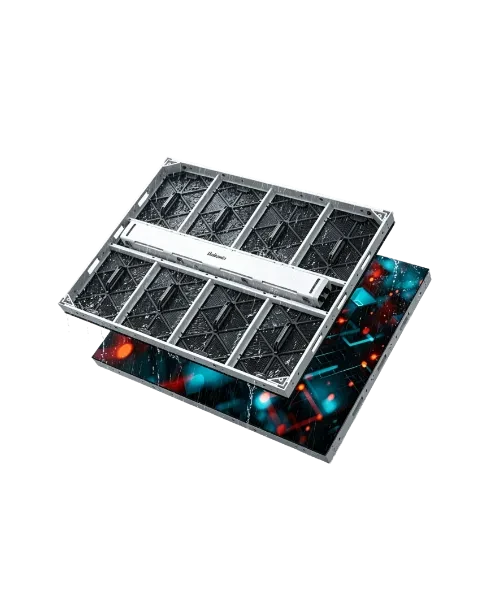
3. URMⅢ
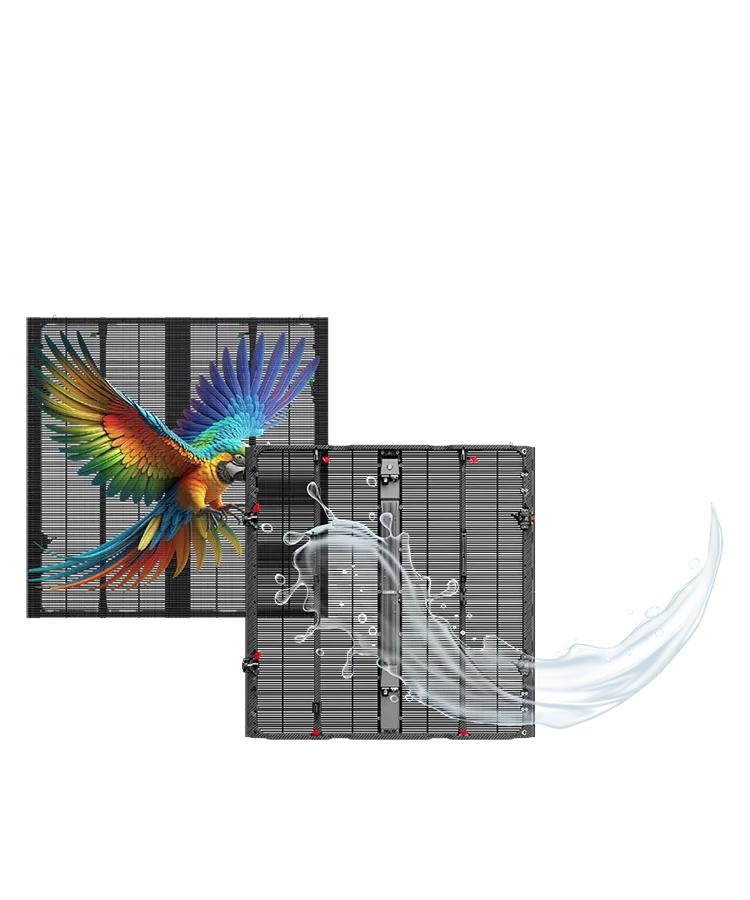
The URMⅢ is a rental LED video wall with indoor pixel pitches from P1.9 to P3.9, and an outdoor range from P2.9 to P4.8. Its click-lock automatic locking system enables single-person installation, and the magnetic module design with pop-up power box makes on-site maintenance fast and quiet.
Key Specs:
- Pixel pitch: P1.9/2.6/2.9/3.9 for indoor, P2.9/3.9/4.8 for outdoor
- Refresh rate: 3,840 Hz
- Grayscale: 14-bit
- Contrast ratio:up to 6,000:1
- Brightness: 800–1,000 nits (indoor) / 4500nits (outdoor)
- Cabinet size: 500mm × 500mm × 71mm (or 500mm × 1,000mm × 71mm)
- Maintenance: Pinch n’ Go Module
At Unilumin, our LED video wall portfolio covers a wide range of broadcast, XR, and virtual production requirements. Contact our team to discuss specifications, request samples, or connect with your regional distributor support.